
If you’re dreaming of camper van life, chances are you’ve gone down the same rabbit hole we did: Should we build a camper van from scratch, buy a custom build, or go with a pre-built camper van?
On the surface, a DIY camper van build can look cheaper and more flexible. Custom vans look beautiful but expensive. Pre-built camper vans sit somewhere in the middle: convenient, but maybe less personal. After months of research, countless videos, spreadsheets, and honest conversations about our skills (and patience), our family of 4 decided to buy a 2025 Winnebago Solis 59PX. It wasn’t the cheapest option, but it turned out to be the smartest one for us.
In this post, I’ll break down the pros and cons of a pre-built camper van vs building one yourself vs having one custom made, explain why we ultimately chose the Solis 59PX, and help you decide which route might make the most sense for your family and travel style.
Pre-Built Camper Van
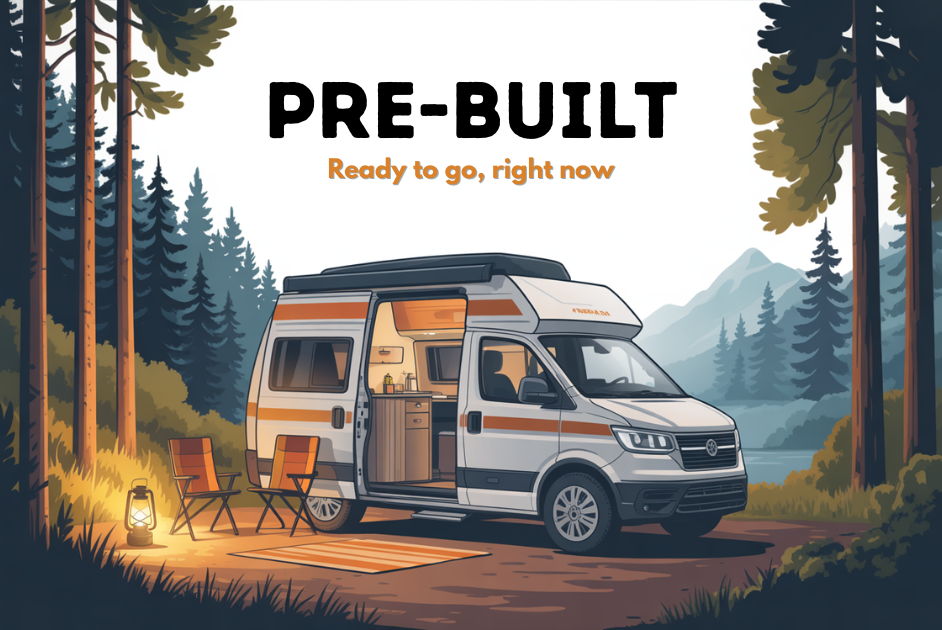
Factory-built vans from established manufacturers like Winnebago, Airstream, and Roadtrek. These come fully finished, road-ready, and backed by warranties. RV’s also mostly fit into this category.
Pros of Buying a Pre-Built Camper Van
1. You can start traveling immediately
This was huge for us. With a pre-built camper van, you can drive off the lot and start exploring that same day. No months-long build, no stalled weekends, and no half-finished systems.
One of our favorite parts of van life is how easy mornings are. We wake up, make breakfast, and we’re already where the adventure starts. The kids unzip the window screens in the pop-top and immediately see trees, mountains, or desert right outside their beds. That kind of experience is hard to put a price on.
2. Proven, family-friendly layouts
Manufacturers like Winnebago refine their layouts over years of real-world use. The Solis 59PX checked every box for our family:
- Full kitchen
- Enclosed bathroom
- 4 legitimate seat-belted seats
- A full bed for adults
- A pop-top that comfortably fits kids (and even adults)
- Room to store our mountain bikes inside the van (2 full-sized and 2 kids bikes)
The pop-top comfortably sleeps 2 adults or kids, and realistically could fit 3 kids up top if needed. Combined with the main bed and the included Luno bed (which lays across the front seats), there is potential sleeping space for up to 6 people, even though there are only seatbelts for 4.
Other vans that we considered that sat and slept four…
| Camper Van | Typical New Price Range | Notes |
|---|---|---|
| Winnebago Solis 59P / 59PX | $95,000 – $115,000 | One of the most affordable true 4-person vans with a pop-top & Luno bed. |
| Thor Motor Coach Sequence 20L w/ SkyBunk | $105,000 – $125,000 | SkyBunk option is hard to find; interior feels tighter. Does have tv & microwave. |
| Thor Motor Coach Tellaro 20A w/ SkyBunk | $110,000 – $130,000 | SkyBunk option is hard to find; Closest to the Solis. Has tv & microwave. |
| Thor Motor Coach Scope 18M | $105,000 – $120,000 | Requires nightly bed conversion; limited storage for bikes and car seats |
| Roadtrek Zion Slumber | $135,000 – $155,000 | Kids would sit in the back which isn’t ideal; less gear storage. Lots of upgrades. |
| Storyteller Overland Crew Mode | $187,000 – $250,000 | Option for 5 seatbelts & pop-top lunar-bed. Premium upgrades |
3. Warranty & peace of mind
Knowing we have a factory warranty gives us confidence when we’re far from home. If something goes wrong, we aren’t guessing or tearing into systems hoping we fix the problem correctly. That said, there are technically two warranties involved: one through Ram for the chassis and drivetrain, and one through Winnebago for the build-out and interior systems. In some situations, determining which warranty applies can take extra time, and occasionally Ram and Winnebago may each point to the other as responsible, which can make resolving an issue more of a process.
4. Safety & compliance
Electrical, propane, plumbing, and crash safety all meet manufacturer standards. When you’re traveling with kids through mountain passes or long highway stretches, that level of safety and compliance provides peace of mind that’s hard to replicate with a DIY build.
5. Strong owner community
One unexpected benefit has been the huge Winnebago Solis owner community on Facebook. From troubleshooting tips to upgrade ideas, there’s almost always someone who has already solved the problem you’re facing. With a custom or DIY build, every van is different, and that shared knowledge is much harder to find.
Cons of a Pre-Built Camper Van
1. Higher upfront cost
Pre-built camper vans require a larger upfront investment compared to DIY builds. While you’re paying for professional construction, tested systems, and a warranty, the sticker price can still feel intimidating, especially when comparing it to an empty cargo van. We have learned that typically they sell for well under the MSRP. For example, the MSRP for the new van we bought was around $180k, but we paid $105k.
2. Less customization initially
With a pre-built van, you’re choosing from an existing layout rather than designing every detail yourself. While many layouts are well thought out, there may be features you wouldn’t have chosen or small changes you wish you could make from day one. They also feel generic and basic, so you might want to add things to make it feel more homey.
3. You adapt to the layout instead of designing it
Rather than building around your exact habits, you learn how to live within the layout that’s already there. Over time, most owners adjust routines and storage to make it work, but it does require some flexibility and compromise.
For us, those were reasonable trade-offs.
DIY Build Camper Van
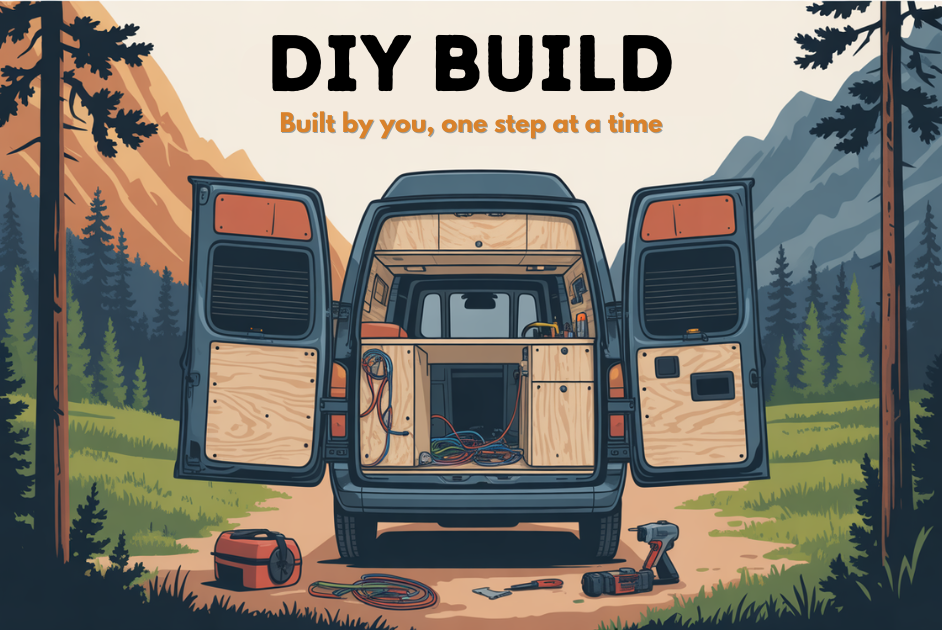
You purchase an empty cargo van and build everything yourself including insulation, electrical, plumbing, cabinetry, and layout.
Pros of Building a Camper Van Yourself
1. Total customization
A DIY build allows you to design every aspect of the van around your exact needs, from layout and materials to storage, systems, and finishes. If you have a very specific vision or unique requirements, this is the only option that offers complete creative control. You can also use unique chassis such as a bus, mini-van, car, etc.
2. Potentially lower upfront cost
Building your own camper van can reduce upfront costs compared to buying a pre-built or custom van, especially if you already own tools or can spread expenses over time. That said, savings depend heavily on how simple or complex the build becomes. If you don’t want a bathroom, extra storage, etc, you can save costs by not installing them.
3. Pride in building something yourself
There’s a deep sense of satisfaction that comes from traveling in a van you built with your own hands. For many people, the process itself is part of the adventure and becomes just as meaningful as the trips that follow. You will be able to have your personality shine through in it.
DIY builds can be incredibly rewarding, if you enjoy the building process itself and have the time to do so.
Cons of a DIY Camper Van Build
1. Costs add up fast
While DIY builds can look cheaper on paper, tools, mistakes, upgraded components, and rework add up quickly. Many people end up spending as much as, or more than, a pre-built van depending on how complex the build becomes and how many changes are made along the way.
2. Time is a huge investment
Even experienced builders often spend hundreds of hours on a van build. For us, that time would have come directly out of family trips and adventures. Most DIY builds take several months to complete, which simply wasn’t realistic for our season of life.
3. Higher risk of long-term issues
Electrical or plumbing problems don’t always show up right away. Without prior experience, there’s a real concern that issues could surface months or years later, often when you’re far from home and relying on everything to work.
4. No warranty and fewer insurance options
If something breaks, you’re on your own. DIY builds typically don’t come with warranties, and it can also be more difficult to find affordable insurance coverage compared to factory-built camper vans.
Professionally Custom Built Camper Van
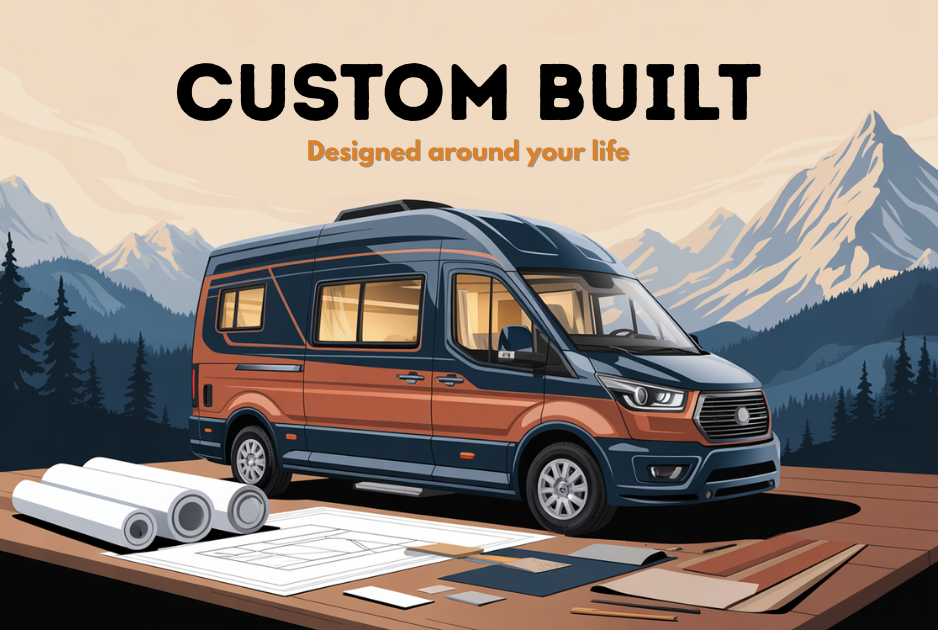
Custom camper van builds sit between DIY and pre-built vans, offering a fully personalized layout without having to do the work yourself. These vans are designed and built by professional conversion companies, often resulting in beautiful craftsmanship and thoughtful details tailored to how you travel. For many people, custom builds represent the dream setup, but they also come with higher costs, longer timelines, and a different set of trade-offs worth understanding.
Pros of Professionally Custom Built Vans
- Professionally built – Custom vans are constructed by experienced builders who handle complex systems like electrical, plumbing, and heating, reducing the risk of costly mistakes.
- Fully customized – Every detail can be designed around how you travel, from sleeping arrangements to gear storage, workspace needs, and finishes.
- Often stunning craftsmanship – Many custom builders focus heavily on design and materials, resulting in vans that feel polished, thoughtful, and truly one of a kind.
Cons of Professionally Custom Built Vans
- Significantly more expensive – Custom builds are typically the most expensive option, especially once upgraded components, premium materials, and labor are factored in. The ones we were looking at for a family of four, were between $150,000–$250,000.
- Long wait times – Build schedules can stretch well beyond a year, which means delaying travel plans and tying up a large deposit for months. Some companies have in stock units, but we found that they were usually for 2 people, not a family of 4.
- Less standardized support and community – Because each van is unique, troubleshooting and long-term support can be more challenging, with fewer shared resources compared to factory-built vans.
We loved the idea of a custom van, but the cost and wait time made it unrealistic for us.
Why We Chose the 2025 Winnebago Solis 59PX
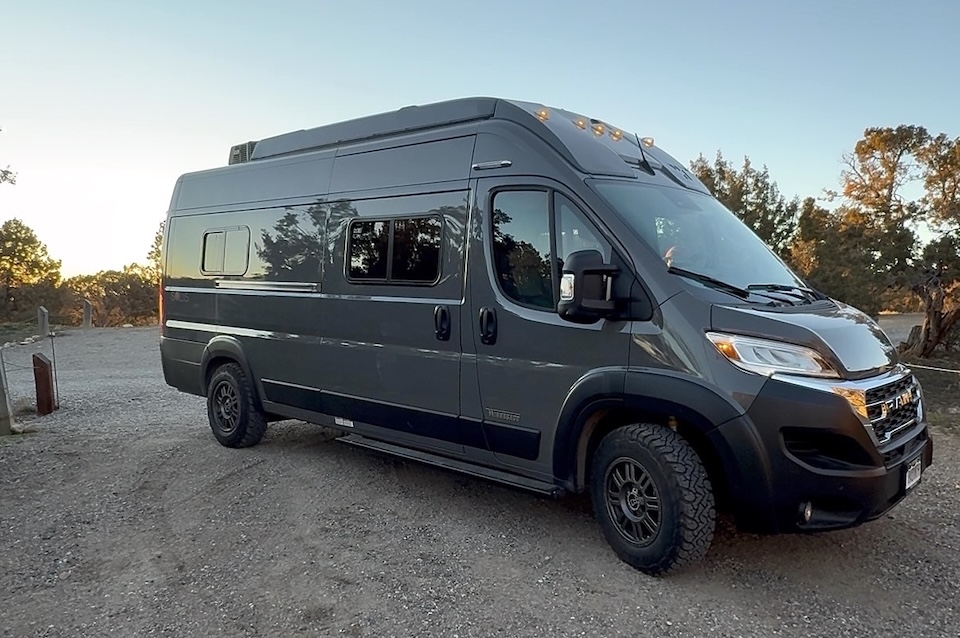
After comparing all three options, the Winnebago Solis 59PX offered the best balance of function, value, and peace of mind for our family.
Sleeping & Seating That Works for Families
- Main bed for adults
- Pop-top for kids (with room to grow)
- Luno bed across the front seats for an extra sleeper
- Four proper seat belts
Storage for Adventure Gear
The 59PX layout lets us fit:
- Two full-size mountain bikes (only removing the front wheels)
- Two kids’ bikes under the bed
That alone eliminated many other layouts for us.
Updated 2025 Chassis Features
The 2025 and newer models use a new chassis, including:
- Automatic lane keep assist
- Adaptive cruise control
- Improved driving comfort and safety
Those features matter on long road trips.
Cost Comparison: What We Found
| Option | Typical Cost Range |
|---|---|
| DIY Camper Van Build | $70,000 – $120,000 |
| Pre-Built Camper Van | $90,000 – $140,000 |
| Custom Camper Van Build | $150,000 – $250,000+ |
When factoring in time, warranty, resale value, and avoided mistakes, the Solis made financial sense for us.
Would We Make the Same Choice Again?
Yes, without hesitation!
If we were starting over today, we would absolutely choose the Winnebago Solis 59PX again. It allowed us to skip the stress, start traveling immediately, and focus on what we actually wanted to do: explore together as a family.
Final Thoughts: Build or Buy?
- Choose DIY if you love building and problem-solving
- Choose Custom if budget isn’t a concern
- Choose Pre-Built if you value time, reliability, and community
For our family, buying a pre-built camper van was the smarter choice. If you’re researching camper vans and have questions about the Solis 59PX, traveling with kids, or real-world layouts, I’m always happy to share what we’ve learned along the way.
Leave a Reply